Showing posts with label beginner. Show all posts

Saturday, 11 July 2015

talking about FAMILY

One of the first subject that you are able to talk about with beginner levels is FAMILY. Partly because you may use relatively easy language to do this, like verbs TO BE and TO HAVE GOT, but also because that's something close to everyone. My take on the subject is fairly simple and involves using pictures and a speaking game. Hope you'll like it.
SPEAKING
Remind the students the rules of using 's in expressing possessions or family relations. You may do it as follows:
  • Whose book is it? It's my brother's book. - It is his book.
  • Whose pen is it? It's my deskmate's pen. - It's her pen.
  • Whose car is it? It's my grandparents' car. - It's their car.

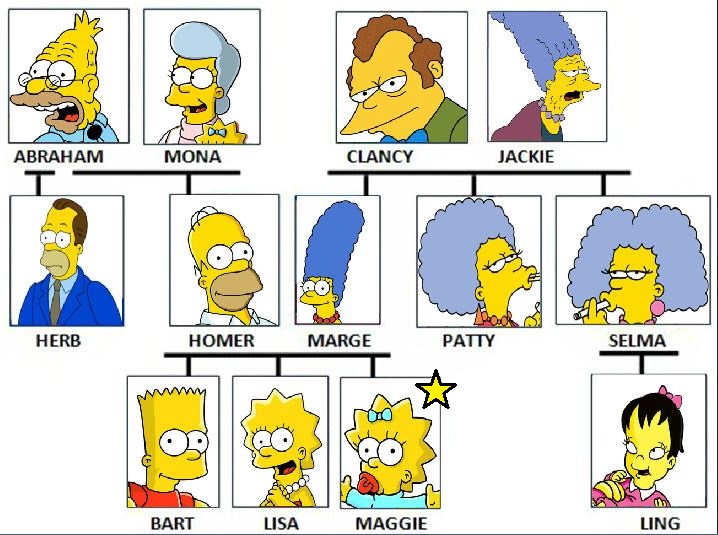
The students are to look at the pictures. Ask them Who is who? to a person marked with a star.

Who is Mona to Marge?
Who is Patty?
Who is Herb?
etc.
Who is Ling to Abraham?
Who is Mona?
Who is Homer?
etc.
Who is Patty to Maggie?
Who is Lisa?
Who is Ling?
etc.


WRITING
You may also use the picture without stars and ask the students to fill in the blanks in the sentences below.

Bart is Lisa's _________________________ 
Marge is Homer's_________________________ 
Clancy is Selma's_________________________ 
Abraham is Mona's_________________________ 
Maggie is Ling's_________________________ 
Lisa is Patty's_________________________ 
Homer is Abraham's_________________________ 
Selma is Ling's adoptive_________________________ 
Bart is Herb's_________________________ 
Abraham is Lisa's_________________________ 
Bart and Lisa are Marge's_________________________ 
Maggie is Jackie's_________________________ 
Maggie is Marge's_________________________ 
Herb is Marge's_________________________ 
Patty is Selma's_________________________ 
Abraham is Marge's_________________________ 
Herb is Maggie's_________________________ 
Jackie is Homer's_________________________ 
Marge is Herb's_________________________ 
Homer and Marge are Lisa's_________________________ 
Homer and Herb are Clancy's_________________________ 
Bart and Lisa are Maggie's_________________________ 
Marge is Mona's_________________________ 
Maggie and Bart are Ling's_________________________ 

SPEAKING GAME
Prepare cards with words representing different members of the family. Put them on a table face down. The student take turns to pick a card and using possessive 's explain the word to the class.
You may use the basic words but you may also enrich the game with words such as:
a boyfriend
a widower
a divorcee
twins
a stepmother
a great grandmother
etc.

DISCUSSION POINTS
  • How big is your family?
  • Which family is bigger: that on your father's side or your mother's?
  • Who is the oldest in your family?
  • Who is the youngest?
  • How many brothers and sisters have you got?
  • How many aunts and uncles have you got?
  • How many (first) cousins have you go?
  • Who are you named after?

Wednesday, 29 April 2015

making requests with WOULD

There are plenty of ways to make requests or ask politely about something. Today I'd like to share a very simple and quick speaking activity in which the students are asked to use different variations of WOULD (also in expressing wishes). It could prove useful both in the practice stage of a lesson and as a revision exercise. Enjoy.

GRAMMAR PRACTICE
The teacher asks particular students to make sentences with would, would like, would love or wouldn't like.
  • You want to do something with your friend tonight. 
  • You are in a restaurant and you ask for a glass of water.
  • You are saying having children is not for you.
  • At school you’re asking the teacher to repeat something.
  • You want to be a famous artist very much.
  • You are saying how much you want to go to Casablanca.
  • You are offering your friend a piece of cake.
  • You don't like to work as an undertaker.
  • You are asking your friend where you should put the box.
  • You are explaining that your family doesn’t like to live in a village.
  • On a train station you’re asking for a one way ticket to Glasgow.
  • You are excited about going to a film premiere with your friend.

Thursday, 26 March 2015

WHAT HAS JUST HAPPENED?

A few days ago I came across a very short but hilarious video of an eagle performing what is call an epic facial expression. It inspired me to introduce it in the class to practice the use of JUST in PRESENT PERFECT sentences. I believe it may be fun to use the video in the class and let the student comment on it in a creative way. Here is the short activity that I came up with.
SPEAKING/VIDEO
https://www.youtube.com/watch?v=zmizjAOH4b4
The teacher plays a short video. The students' task is to answer the question:
What has just happened to the eagle?

It's a good idea to encourage the students to be creative and invent some crazy answers to the question. Some examples of the answers may be as follows:

  • It has just saw another eagle in its nest.
  • It has just sat on a thorny tree branch.
  • It has just saw a hunter pointing a rifle at it.
  • It has just learnt that its wife pregnant.
  • It has just learnt that he won a jackpot in a lottery. 
  • It has just realized that he forgot to flush the toilet.

Wednesday, 25 March 2015

telling STORIES IN THE PAST

A fun way to practice PAST SIMPLE or/and PAST CONTINUOUS structures is obviously storytelling. Here are two enjoyable and engaging activities I always use with my students. To take it to a next level, you may add a speech sequence expressions to the lesson, such as FIRST, NEXT, THEN, BEFORE THAT, AFTER THAT, LATER, IN THE END or FINALLY. Enjoy.

SPEAKING 1
The teacher prepares little pieces of paper with random words. The students then one by one draw lots. Their task now is to make up a story together incorporating all the chosen words. The teacher may start a story with a single sentence on board and as the students give their suggestions for its follow up, the teacher writes it down as well.

Examples of entry sentences:
One day, I was walking my dog in the park when a strange things happened. 
One day, as I was coming back home from work I saw a house on fire.
One day. I woke up late for school.
One day, I had a very peculiar dream.

Examples of word cards:
RAIN * CHEEKS * FEET * STREET * SOCKS * TOMATO * MONKEY * CREDIT CARD * WINDOW * SOAP * PILLOW * KNIFE * SUNSET * MONEY * TREE * SWIMMING POOL * WATER * TAXI * VOICE * BICYCLE * HEADACHE * BATHROOM * JEANS * GIRAFFE * BOOKSHOP * CLOCK * BABYSITTER * GOLF CLUB * STAIRS * BASEMENT 

NOTE
You may do the same exercises with verb cards, e.g. regular verbs in the early stages of learning Past Simple. 

Examples of verb cards:
answer * ask * attack * borrow * brush * call * change * clap * clean * collect * copy * cry * dance * drop * earn * fail * fix * fry * help * hug * invite * join * jump * kick * kill * kiss * knit * laugh * learn * listen * live * look * marry * mix * need * open * paint * pass * play * promise * relax * rob * save * scream * talk * travel * use * visit * wait * walk * wash * watch * work * yawn * zip

SPEAKING 2
The teacher asks students the following questions and writes down their answers on board. Each students gets to answer one question. The number of questions depends on the number of students in the group. 


  • What's your favourite food?
  • What smells bad?
  • What are you afraid of?
  • Which English word starts with "V"?
  • What is the synonym of good?
  • Which animal can't fly?
  • What can you lose?
  • Which bad habit can you think of?
  • Which country would you like to visit?
  • Which job do you find boring?
  • What is there in your pocket?
  • What illness can you think of?
  • What do you wear in winter?
  • Which object do you use everyday?

The students then are asked to use all the words listed and combine them in a single story. 

Wednesday, 11 March 2015

ASKING QUESTIONS

Today I'd like to share a short exercise that could help the students master the art of question asking in English which usually is much harder than question answering. It involves a bit of writing and employs students creativity even on the lower levels. 
SPEAKING
Prepare a handout for each student with the entries of the questions. Students are to choose one groupmate they would like to ask the questions to, finish the questions to their liking (and write few themselves) and then give it with the student they chose. He/she answers them aloud. You may also ask the students to give the questions to their partner on the right or to draw lots with the names to prevent leaving any students without questions.

QUESTIONS FOR __________________________________
                       (Name)


Are you _________________________________________________________?
Do you __________________________________________________________?
Do you think ______ _______________________________________________?
What’s your favourite ______________________________________________?
Where do you usually ______________________________________________?
How ____________________________________________________________?
What are you going to ______________________________________________?
When did you last _________________________________________________?
Have you ever ____________________________________________________?
Would you like to __________________________________________________?
_________________________________________________________________?
_________________________________________________________________?


It's a good idea to encourage the students to ask follow up questions to the answers their groupmates are giving.

Saturday, 31 January 2015

talking about PAST IN PROGRESS

The title of this post is rather technical but in fact it's quite easy to understand - it actually means using PAST CONTINUOUS. It's usually taught right after PAST SIMPLE and is not the easiest English grammar structure to understand. But here's a nice example how to practice it in a less conventional way. I've found this exercise somewhere on the web but modified it to my own fashion - I'm also using this activity to teach some interesting body language verbs. Enjoy!
VOCABULARY
Can you do those things? Repeat the words after the teacher and do the actions.

blink *  breathe * cough roll rub * scratch sneeze * sniff * stretch tap * touch * yawn 

SPEAKING
Answer the questions below in full sentences.

  • What were you doing when the teacher came in?
  • What were you doing before you came to lesson today?
  • What was she doing while the teacher was checking the attendance?
  • What was he doing while you were answering the teacher's question?
Now it's time for a game. One student is observing his/her classmates for 1-2 minutes. During this time the rest of the class performs one of the actions previously learnt (yawn, blink, rub...). The observer or anybody else isn't allowed to speak. After a minute or two the teacher says STOP and asks the observer the question: What were you fellow students doing when I said STOP?
The observer must then name all the actions his classmates were performing using PAST CONTINUOUS, e.g She was tapping her finger. He was rubbing his neck. The more correct answers he/she gets, the more points he/she earns. The game is repeated with few more students. It's a good idea for the teacher to take part in the miming too.  


Thursday, 29 January 2015

using LINKING WORDS

Here's a nice an entertaining way to practice linking words. I tend to use it with every beginner group and find it very enjoyable and yet educational. I found it a long time ago on one of the ESL web pages and modified it to fit well to my students abilities. This particular version practices SO, AND, BUT and BECAUSE, but it will work great with more advance ones like IN SPITE OF, AS, THEREFORE, WHEREAS etc.
SPEAKING
For this game you need a coin and pieces of paper with sentence entries. Each student throws the coin. If the coin shows HEADS they should finish their entries with sentences beginning with SO and BUT, if the coin shows TAILS they should finish them with AND and BECAUSE. Each sentence must be finished twice.

HEADS - so, but
TAILS - because, and

e.g. 
She isn't married BUT she has got a boyfriend.
She isn't married SO she spends a lot of time with her friends. 

Here are some examples of entries that you may use.
  • I'm tired
  • There is nothing on television tonight
  • This is a very angry dog
  • My father is a lawyer
  • I can't ride a motorbike
  • We haven't got anything to eat tonight
  • I didn't have breakfast today
  • She's taller than me 
  • He has got a beautiful girlfriend
  • My favourite colour is yellow
  • That restaurant is very expensive
  • We have an exam tomorrow
  • She's unhappy
  • I love travelling
  • Tigers can’t fly
  • There are four chairs in the classroom
  • My sister’s hobby is fashion
  • I haven’t got any money
  • They wake up very early at weekends
  • Police officers must be brave
  • I have got long hair
  • Italy is warmer than Denmark
  • I’m late for work
  • This woman can sing well
  • Bill Gates is the richest American
  • She’s single
  • My boss drives a fast car
  • I don’t drink milk
  • My friend speak German
  • She hasn’t got a mobile phone
  • These brownies are delicious
  • I’m not rich
  • English is easy
  • Professional basketball players can jump high
  • Our cousin has got a pet rabbit
  • He is at a hospital now
  • There are some oranges in the kitchen

Wednesday, 28 January 2015

HAVE YOU EVER...?

PRESENT PERFECT is not the easiest tense for students to comprehend. The difficulties start with the understanding of the usage. And of course there's the past participle... However there are some nice exercises helping to practice the grammar principles in a fun way. Here are two ways to introduce and practise HAVE YOU EVER...? questions
GRAMMAR
Asking about life experience you may use HAVE YOU EVER...? questions.

Have you EVER eaten sushi?
Yes, I have.
No, I haven't.
No, I have NEVER eaten sushi.

Has she EVER had a boyfriend?
Yes, she has.
No, she hasn't.
No, she has NEVER had a boyfriend.

SPEAKING
Ask the students to write up to five different Have you ever...? questions that they will later ask to five different classmates. Encourage not to be shy to ask some crazy questions.

SPEAKING
Prepare two sets of cards. One saying TELL THE TRUTH, the other saying TELL A LIE. Put them on a table face down. 


Tell the Truth

Tell a Lie


Divide the class into two opposite teams. A person from team one then takes one card not showing it to anyone. The teacher then asks him/her a random Have you ever...? question. The student has to answer according to the instruction on the card he/she chose, i.e. if the card says to tell the truth the student must answer according to his true experience. but if it says to tell a lie, the student must lie.
The members of the opposite team then decide if the students told the truth or lied. If their answer is correct, they get one point.

EXAMPLES OF QUESTIONS YOU MAY ASK
  • Have you ever cheated on an exam?
  • Have you ever won some money in a lottery?
  • Have you ever gossipped about your best friend?
  • Have you ever worn glasses?
  • Have you ever forgotten your mum's birthday?
  • Have you ever slept on a beach?
  • Have you ever seen a ghost?
  • Have you ever worn a pink mini skirt?
  • Have you ever fallen from stairs?
  • Have you ever broken your arm?
  • Have you ever been in a fist fight?
  • Have you ever been on TV?
  • Have you ever had a boyfriend/girlfriend from another country?
  • Have you ever been in a car accident?
  • Have you ever eaten insects?
  • Have you ever gone skiing?
  • Have you ever written a poem?
  • Have you ever made brownies?
  • Have you ever met anyone famous?
  • Have you ever ridden  a camel?
  • Have you ever climbed a mountain?
  • Have you ever told a lie?
  • Have you ever took part in a flash mob?
  • Have you ever milked a cow?
  • Have you ever sung in a shower?
  • Have you ever fainted?
  • Have you ever fired a gun?
  • Have you ever travelled without paying for a ticket?

Thursday, 22 January 2015

talking about HOUSEWORK

I've noticed a funny thing today - it's the middle of January but most of my lady neighbours are busy doing the spring cleaning. Well, the weather sure does encourage this sudden outburst of  housework fever. It inspired me to share some exercises about CHORES. You may use this subject to practice PAST CONTINUOUS tense in a less conventional way, however in that case a short revision before actually doing the exercises would be required.
VOCABULARY
Tick the housework that are your responsibility in your household.

___ clean windows 
___ dust 
___ fold towels
___ hang laundry (on clothes line)
___ iron  
___ make bed
___ repair clothes
___ mop the floor
___ polish furniture  
___ scrub the floor 
___ sweep the floor 
___ take the rubbish out / empty trash bin
___ tidy your room
___ vacuum / hoover the floor 
___ wash clothes / do laundry / do the washing 
___ wash the dishes / do the washing up / do the dishes

VOCABULARY
to build up – to increase or grow by adding
to crouch – to be on your knees close to ground
to gross somebody out – to make sb feel disgusted
messy - untidy
mud – wet ground
progressively – increasing bit by bit
time consuming – taking a lot of time
a workout – physical exercise

Fill in the blanks in sentences with new words.

1.    I had to 1_______________down to get my keys from under the table.
2.    I got really fat nowadays. I think I need some good 2_______________.
3.    Travelling by bus is very 3_______________ I’ll go there by car.
4.    My washing machine is broken so the laundry keeps 4_______________.
5.    I haven’t got time to finally clean this 5_______________ bedroom.
6.    Take off your dirty shoes! You’re bringing 6_______________ into the house!
7.    The smell of boiled milk 7_________me ___________. I hate it!
http://www.elllo.org/english/1251/blank.gif8.    You’re getting 8_______________ better with your English.

LISTENING
Listen to a dialogue and answer the questions below.

1. Which of the chores Josh doesn’t like?
a. Doing laundry                       b. Washing dishes
2. How does he feel about cooking?
a. He loves it.                           b. He can’t stand it.  
3. Why doesn’t he like dusting?
a. Because it’s boring.              b. Because of his allergies.
4. Where does the dust come according to what Josh says? 
a.  Dirt                                     b. Dead skin
5. Why does he enjoy mowing the lawn?
a. Because he can get suntan. b. Because it’s a good workout
6. What’s wrong about pulling the weeds?
a. They come back                   b) Your face gets dirty

Which chores are mentioned in the conversation. Tick the ones you hear.

___ cooking
___ dusting
___ hoovering
___ ironing clothes
___ moping the floor
___ mowing the lawn
___ pulling weeds
___ sweeping the floor
___ taking out the trash 
___ washing clothes
___ washing dishes
___ watering the grass

VIDEO
Watch a video and correct the mistakes in the sentences if necessary.

MR BEAN’S SPRING CLEANING
  •  Mr Bean was using his teddy bear to clean the kitchen floor.
  • He was trying to push the laundry into the washing machine.
  • He was hanging the laundry on a clothes line on his balcony.
  • He was looking at himself in the mirror.
  • Mr Bean was polishing the door knob.
  • He was wearing diving goggles.
  • Mr Bean was smelling a very old fish bone.

Now watch the video again and note as many other Past Continuous actions of Mr Bean or Teddy as you can:

  1. …………………………………………………………………………………………………
  2. …………………………………………………………………………………………………
  3. …………………………………………………………………………………………………
  4. ………………………………………………………………………………............................

Monday, 19 January 2015

talking about FOOD PREPARATION

A while ago I came across an interesting game to practice PRESENT CONTINUOUS in the context of food preparation. It works beautifully as a food vocabulary revision. It also proves to be a fun drill helping students to remember PRESENT CONTINUOUS sentence structure better. Have fun!
WARM-UP
You may want to start with a short revision of names of different food to make sure the students won't have any problems with the vocabulary. One easy and entertaining way is to make riddles, e.g. 
- It's a round vegetables. You cry when you cut it.
- It's a small round fruit. People make wine with it.
- It's sweet and good for your teeth, You may use it when you haven't got a toothbrush around.
- It's a warm meal made of water and vegetables. You eat it with a spoon.
etc.

VOCABULARY
Which of the words match best with the verb given? Circle one word in every line.

1.       PEEL
Ò
a banana * a strawberry * rice
2.       CUT        
Ò
milk * chewing gum * an orange
3.       BREAK  
Ò
a potato * an egg * apple juice
4.       OPEN    
Ò
wine * a carrot * a salad
5.       DRINK  
Ò
a watermelon * water * bread
6.       EAT        
Ò
a sandwich *  tea * hot chocolate
7.       MAKE    
Ò
grapes * a cake * an apricot
8.       COOK    
Ò
macaroni * a lollipop * ice cream
9.       MIX         
Ò
soup * a cherry * a tomato

SPEAKING
The rules of the game are simple. Prepare cards with PRESENT CONTINUOUS sentences on them (you may use the examples in the table below or make your own). Put them on a table face down. One of the students takes one card and using gestures and body language tries to convey the message to the rest of the class. A point is granted when the class guesses and says the whole grammatically correct sentence as on the card. You may play it in two team or just have fun with the whole class.

You are peeling a banana.
She is drinking apple juice.
You are cutting bread.
Baby is drinking milk.
Teachers are eating apples.
You are making a cake.
You are cooking macaroni.
I am eating a sandwich.
You are breaking an egg.
We are eating rice.
You are eating a lollipop.
I am eating chewing gum.
A man is opening wine.
You are eating grapes.
He is peeling an orange.
You are buying a watermelon.
Children are eating an ice cream
I am eating soup.
She is mixing a salad.

NOTE
It's a good idea to make a brief revision of PRESENT CONTINUOUS prior the game. You may for example ask the students what their classmates are doing at the moment or ask the following questions to some of the students:
  • What is your father/father doing now?
  • what is your brother/sister doing now?
  • What is your best friend doing now?
  • What is your teacher doing now?
  • What is your boss doing now?
  • What is your neighbour doing now?
  • What is your boyfriend/girlfriend doing now? etc.